Beginners Guide to Beach Camping
We may earn money or products from the companies mentioned in this post.
You don’t have to hike for miles along a remote coastline to enjoy beach camping. Whether you drive right up to your site or take a short trail to reach the shore, beach camping offers the perfect mix of outdoor adventure and seaside serenity—no experience required.
With the right planning and a few handy tips, your first beach camping trip can be both enjoyable and stress-free. This beginners guide to beach camping breaks down everything you need to know—from prep and packing to campsite etiquette—so you can make the most of your time on the sand.
Pre-Trip Planning
Start Small and Simple
If you’re new to beach camping, keep it short and sweet. Opt for a weekend trip that either involves car camping or a hike-in site no more than two to three miles from the trailhead. Summer is the best season for beginners—warmer temps and longer daylight hours make everything easier.

Know Your Destination
Before heading out, research the area. Some beaches have designated campsites with amenities, while others allow dispersed camping directly on the sand. You’ll want to check:
- If permits or reservations are required
- Whether campfires and wood gathering are allowed
- Availability of freshwater sources
- Rules on pets, alcohol, and overnight stays
If you’re hiking in and expect a late arrival, consider staying at a nearby campground the first night and hitting the trail fresh in the morning.
Beginners Guide to Beach Camping and What to Pack
Beach Camping Basics
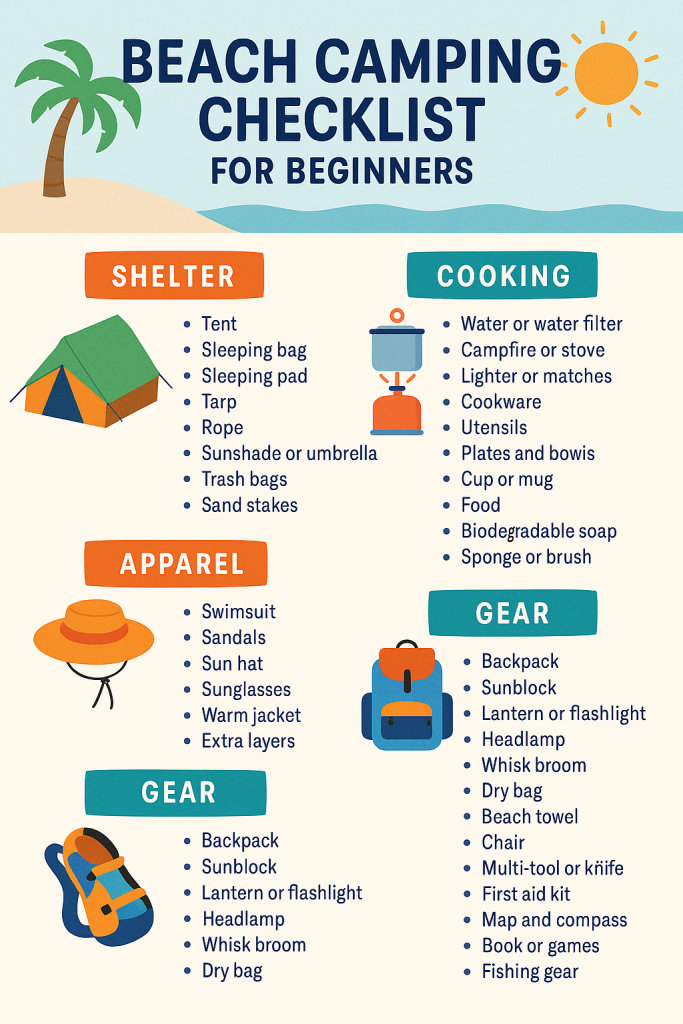
- Tent with rainfly and stakes (or sand anchors)
- Sleeping bag and sleeping pad
- Tarp for under the tent (and a second for shade/rain cover)
- Lightweight stove, pot, pan, and utensils
- Reusable plates, bowls, and cups
- Dish towel, sponge, and biodegradable soap
- Waterproof matches or lighters
- First aid kit
- Flashlight or headlamp (with extra batteries)
Beach-Specific Gear
- Sun protection: sunglasses, a sun hat, and high-SPF sunscreen
- Warm layers: coastal nights can get chilly
- Rain gear: fog and mist are common, even in summer
- Bear canister or food-safe container (even if you’re nowhere near bears, raccoons, and gulls will sniff you out)
- Ziploc bags: for trash, wet clothes, and sand-prone items
- Clothesline and clips: for drying swimsuits and towels
- Small shovel: for bathroom needs or fire pits
Nice-to-Haves

While optional, these items make a big difference.
- Beach chairs or a camp seat kit
- Whisk broom (for sweeping sand from the tent)
- Kites, frisbees, or a beach ball
- Field guides or binoculars
- Compact travel games
- A good book or journal
- Fishing pole and gear
- Extra towels for beach lounging or quick drying
Food and Water Considerations
Don’t Count on Freshwater
Many beach campsites—especially oceanfront ones—don’t have potable water, so be prepared to bring your own or treat what you find. Water filters, purification tablets, or boiling are essential if you’re relying on natural sources.
Plan to bring plenty of drinking water, plus extra for cooking and cleanup.
Campfire Cooking (if allowed)
Cooking over an open fire on the beach is one of life’s great joys.
- Bring a barbecue grate or a cast-iron pan
- Wrap veggies or fish in foil for easy roasting
- Use newspaper or dry twigs to help start fires
- Always extinguish completely and clean up ash responsibly
Setting Up Camp on the Sand
Pitch Smart
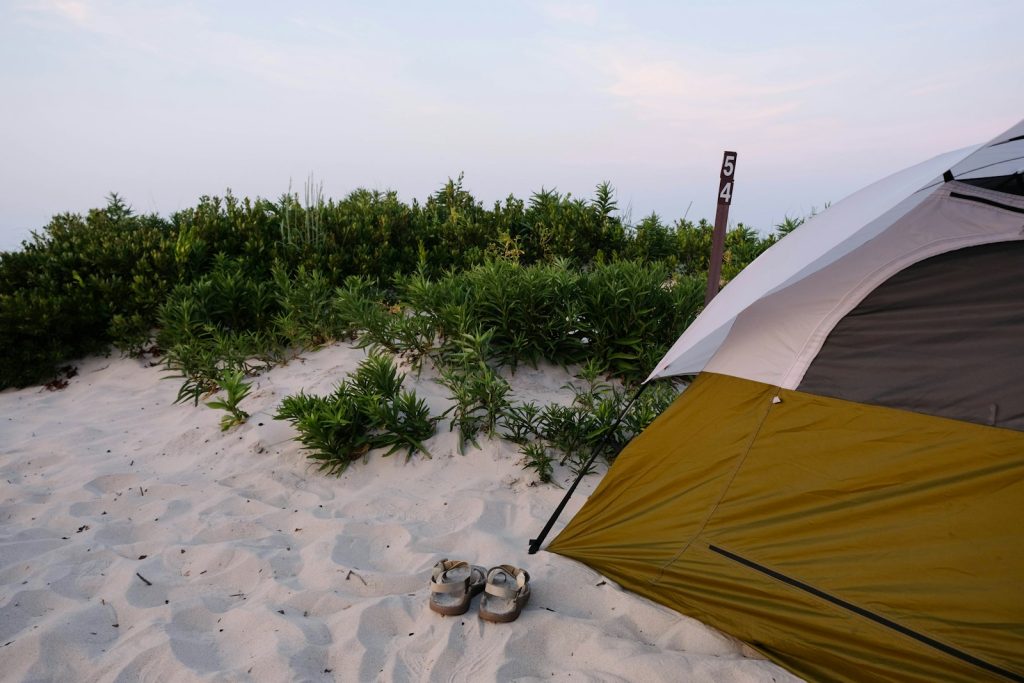
Set up camp well above the high tide line (where the sand stays dry) to avoid a surprise midnight swim. Smooth out the sand beneath your tent and remove debris like shells or sticks before setting up.
Use sandbags or weighted anchors instead of traditional tent stakes—they work better in loose beach sand. If you’re using a tarp, make sure it’s taut and secured to withstand any breeze.
Stay Dry
Beach environments tend to be damp and dewy. Keep gear inside your tent or under cover, and make sure your rainfly is properly attached. Avoid leaving clothes or sleeping gear exposed overnight—they’ll likely be damp in the morning.
Beach Camping Etiquette & Safety
- Respect local wildlife: Never approach or feed animals, and store food securely.
- Leave No Trace: Pack out all trash, food scraps, and hygiene products. Never bury trash in the sand.
- Designate a bathroom area away from water sources and bury waste at least 6-8 inches deep.
- Check tide charts and be aware of rising water levels.
- Avoid glass containers, which are dangerous on beaches.
- Let someone know your plans and estimated return time if you’re venturing off-grid.
Final Thoughts on the Beginners Guide to Beach Camping
Your first beach camping trip won’t be perfect—but it will be memorable. You’ll learn what gear you truly need, what luxuries you can skip, and how amazing it feels to fall asleep to the sound of waves and wake to a sunrise over the water.
As you grow more confident, you can explore more remote coastlines, camp for longer, and even brave other seasons. But for now, breathe in that salty air, roast marshmallows by the shore, and enjoy the magic with our beginners guide to beach camping.
